Loading...
Book NameAuthor Names2024
Genres: List of Genres
PlaceholderPlaceholderPlaceholderPlaceholder
PlaceholderPlaceholderPlaceholder
Write a comment/review
Your rating
Post
User name
0 reviews
165 followers
PlaceholderPlaceholder
July 30, 2026
User name
0 reviews
165 followers
PlaceholderPlaceholder
July 30, 2026
User name
0 reviews
165 followers
PlaceholderPlaceholder
July 30, 2026
User name
0 reviews
165 followers
PlaceholderPlaceholder
July 30, 2026
User name
0 reviews
165 followers
PlaceholderPlaceholder
July 30, 2026
1.2.3.4.5.6
Exclusive savings
instagram
facebook
twitter
linkdin
linkdin
tiktok
threads

COMPANY

  • About Us
  • Contact Us
  • Partners
  • FAQ

EXPLORE

  • Book Clubs
  • How It Works
  • Genres

LEGAL

  • Privacy Policy
  • Terms and Conditions
  • Cookie Policy
  • Data and Privacy Preferences

CONNECT

  • Newsletter Signup
  • Affiliate Programme
  • Blog / Editorial
Powered by World Privilege Plus
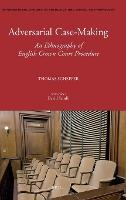
Adversarial Case-Making: An Ethnography of English Crown Court Procedure

Adversarial Case-Making: An Ethnography of English Crown Court Procedure

Thomas Scheffer

2010

Genres: PoliticsLanguage & LinguisticsSociety & CultureLaw

Cases are not objects at hand for legal decision-making; cases are not echoes from a past crime. Cases are, first of all, made within compound discourse apparatus, here the English Crown Court and the procedure/s attached to it. This book reveals the legal production of cases including their relevant features. The socio-legal ethnography visits the natural sites of adversarial case-making: law firms, barristers’ chambers, and Crown Courts. It examines the role and dynamics of client-lawyer meetings, pre-trial hearings, plea bargaining sessions, and jury trials. It focuses on the lawyers’ case-making activities, their procedural contexts, and the resulting cases. As an ethnographic discourse study, the book develops a trans-sequential perspective on the interrelated events and processes of case-making – and by doing so, overcomes the shortcomings of talk-bias and text-bias. The trans-sequential approach pays out in detailed case studies on an alibi, on guilt, or the barrister’s notes; it pays out as well in cross-case studies dealing with legal care, procedural infrastructure, or the case system in the common law tradition.

Want to ReadMark as ReadReviewsEdit

Write a comment/review

Sign UpLogin
User name
0 reviews
165 followers
PlaceholderPlaceholder
July 30, 2026
User name
0 reviews
165 followers
PlaceholderPlaceholder
July 30, 2026
User name
0 reviews
165 followers
PlaceholderPlaceholder
July 30, 2026
User name
0 reviews
165 followers
PlaceholderPlaceholder
July 30, 2026
User name
0 reviews
165 followers
PlaceholderPlaceholder
July 30, 2026
1.2.3.4.5.6
Exclusive savings
Reader's Voices
Reader's Voices
Join a club
Join a club
Children
Children
Non-Fiction
Non-Fiction
Fiction
Fiction
eBooks
eBooks
Bookfellers rewards
Bookfellers rewards
BookfellersBeta
  • Clubs
Sign Up
Sign in
Add a book club
|Join a club
|
|
|
|eBooks
|Bookfellers rewards