Placeholder
Loading...
Book NameAuthor Name
Loading...
Book NameAuthor Name
Loading...
Book NameAuthor Name
Loading...
Book NameAuthor Name
Loading...
Book NameAuthor Name
Loading...
Book NameAuthor Name
Loading...
Book NameAuthor Name
Loading...
Book NameAuthor Name
Loading...
Book NameAuthor Name
Loading...
Book NameAuthor Name
1.2.3.4.5.6

Featured Books of the Month

Loading...
Book Name
Loading...
Book Name
Loading...
Book Name
instagram
facebook
twitter
linkdin
linkdin
tiktok
threads

COMPANY

  • About Us
  • Contact Us
  • Partners
  • FAQ

EXPLORE

  • Book Clubs
  • How It Works
  • Genres

LEGAL

  • Privacy Policy
  • Terms and Conditions
  • Cookie Policy
  • Data and Privacy Preferences

CONNECT

  • Newsletter Signup
  • Affiliate Programme
  • Blog / Editorial
Powered by World Privilege Plus
Loading...
Book NameAuthor Names2024
Genres: List of Genres
PlaceholderPlaceholderPlaceholderPlaceholder
PlaceholderPlaceholderPlaceholder
Write a comment/review
Your rating
Post
User name
0 reviews
165 followers
PlaceholderPlaceholder
July 31, 2026
User name
0 reviews
165 followers
PlaceholderPlaceholder
July 31, 2026
User name
0 reviews
165 followers
PlaceholderPlaceholder
July 31, 2026
User name
0 reviews
165 followers
PlaceholderPlaceholder
July 31, 2026
User name
0 reviews
165 followers
PlaceholderPlaceholder
July 31, 2026
1.2.3.4.5.6
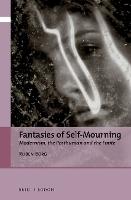
Fantasies of Self-Mourning: Modernism, the Posthuman and the Finite

Fantasies of Self-Mourning: Modernism, the Posthuman and the Finite

Ruben Borg

2019

Genres: Literary FictionBiographyPhilosophy

In Fantasies of Self-Mourning Ruben Borg describes the formal features of a posthuman, cyborgian imaginary at work in modernism. The book’s central claim is that modernism invents the posthuman as a way to think through the contradictions of its historical moment. Borg develops a posthumanist critique of the concept of organic life based on comparative readings of Pirandello, Woolf, Beckett, and Flann O’Brien, alongside discussions of Alfred Hitchcock, Chris Marker, Béla Tarr, Ridley Scott and Mamoru Oshii. The argument draws together a cluster of modernist narratives that contemplate the separation of a cybernetic eye from a human body—or call for a tearing up of the body understood as a discrete organic unit capable of synthesizing desire and sense perception.
Want to ReadMark as ReadReviewsEdit

Write a comment/review

Sign UpLogin
User name
0 reviews
165 followers
PlaceholderPlaceholder
July 31, 2026
User name
0 reviews
165 followers
PlaceholderPlaceholder
July 31, 2026
User name
0 reviews
165 followers
PlaceholderPlaceholder
July 31, 2026
User name
0 reviews
165 followers
PlaceholderPlaceholder
July 31, 2026
User name
0 reviews
165 followers
PlaceholderPlaceholder
July 31, 2026
1.2.3.4.5.6
Exclusive savings
Exclusive savings
Reader's Voices
Reader's Voices
Join a club
Join a club
Children
Children
Non-Fiction
Non-Fiction
Fiction
Fiction
eBooks
eBooks
Bookfellers rewards
Bookfellers rewards
BookfellersBeta
  • Clubs
Sign Up
Sign in
Add a book club
|Join a club
|
|
|
|eBooks
|Bookfellers rewards