Loading...
Book NameAuthor Names2024
Genres: List of Genres
PlaceholderPlaceholderPlaceholderPlaceholder
PlaceholderPlaceholderPlaceholder
Write a comment/review
Your rating
Post
User name
0 reviews
165 followers
PlaceholderPlaceholder
July 31, 2026
User name
0 reviews
165 followers
PlaceholderPlaceholder
July 31, 2026
User name
0 reviews
165 followers
PlaceholderPlaceholder
July 31, 2026
User name
0 reviews
165 followers
PlaceholderPlaceholder
July 31, 2026
User name
0 reviews
165 followers
PlaceholderPlaceholder
July 31, 2026
1.2.3.4.5.6
Exclusive savings
instagram
facebook
twitter
linkdin
linkdin
tiktok
threads

COMPANY

  • About Us
  • Contact Us
  • Partners
  • FAQ

EXPLORE

  • Book Clubs
  • How It Works
  • Genres

LEGAL

  • Privacy Policy
  • Terms and Conditions
  • Cookie Policy
  • Data and Privacy Preferences

CONNECT

  • Newsletter Signup
  • Affiliate Programme
  • Blog / Editorial
Powered by World Privilege Plus
Imagining the Unimaginable: World War, Modern Art, and the Politics of Public Culture in Russia, 1914-1917

Imagining the Unimaginable: World War, Modern Art, and the Politics of Public Culture in Russia, 1914-1917

Aaron J. Cohen

2008

Genres: HistoryArt & Design

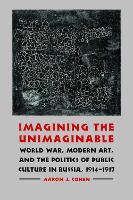
As World War I shaped and molded European culture to an unprecedented degree, it also had a profound influence on the politics and aesthetics of early-twentieth-century Russian culture. In this provocative and fascinating work, Aaron J. Cohen shows how World War I changed Russian culture and especially Russian art. A wartime public culture destabilized conventional patterns in cultural politics and aesthetics and fostered a new artistic world by integrating the iconoclastic avant-garde into the art establishment and mass culture. This new wartime culture helped give birth to nonobjective abstraction (including Kazimir Malevich's famous Black Square), which revolutionized modern aesthetics. Of the new institutions, new public behaviors, and new cultural forms that emerged from this artistic engagement with war, some continued, others were reinterpreted, and still others were destroyed during the revolutionary period. Imagining the Unimaginable deftly reveals the experiences of artists and developments in mass culture and in the press against the backdrop of the broader trends in Russian politics, economics, and social life from the mid-nineteenth century to the revolution. After 1914, avant-garde artists began to imagine many things that had once seemed unimaginable. As Marc Chagall later remarked, "The war was another plastic work that totally absorbed us, which reformed our forms, destroyed the lines, and gave a new look to the universe."

Want to ReadMark as ReadReviewsEdit

Write a comment/review

Sign UpLogin
User name
0 reviews
165 followers
PlaceholderPlaceholder
July 31, 2026
User name
0 reviews
165 followers
PlaceholderPlaceholder
July 31, 2026
User name
0 reviews
165 followers
PlaceholderPlaceholder
July 31, 2026
User name
0 reviews
165 followers
PlaceholderPlaceholder
July 31, 2026
User name
0 reviews
165 followers
PlaceholderPlaceholder
July 31, 2026
1.2.3.4.5.6
Exclusive savings
Reader's Voices
Reader's Voices
Join a club
Join a club
Children
Children
Non-Fiction
Non-Fiction
Fiction
Fiction
eBooks
eBooks
Bookfellers rewards
Bookfellers rewards
BookfellersBeta
  • Clubs
Sign Up
Sign in
Add a book club
|Join a club
|
|
|
|eBooks
|Bookfellers rewards