Placeholder
Loading...
Book NameAuthor Name
Loading...
Book NameAuthor Name
Loading...
Book NameAuthor Name
Loading...
Book NameAuthor Name
Loading...
Book NameAuthor Name
Loading...
Book NameAuthor Name
Loading...
Book NameAuthor Name
Loading...
Book NameAuthor Name
Loading...
Book NameAuthor Name
Loading...
Book NameAuthor Name
1.2.3.4.5.6

Featured Books of the Month

Loading...
Book Name
Loading...
Book Name
Loading...
Book Name
instagram
facebook
twitter
linkdin
linkdin
tiktok
threads

COMPANY

  • About Us
  • Contact Us
  • Partners
  • FAQ

EXPLORE

  • Book Clubs
  • How It Works
  • Genres

LEGAL

  • Privacy Policy
  • Terms and Conditions
  • Cookie Policy
  • Data and Privacy Preferences

CONNECT

  • Newsletter Signup
  • Affiliate Programme
  • Blog / Editorial
Powered by World Privilege Plus
Loading...
Book NameAuthor Names2024
Genres: List of Genres
PlaceholderPlaceholderPlaceholderPlaceholder
PlaceholderPlaceholderPlaceholder
Write a comment/review
Your rating
Post
User name
0 reviews
165 followers
PlaceholderPlaceholder
August 1, 2026
User name
0 reviews
165 followers
PlaceholderPlaceholder
August 1, 2026
User name
0 reviews
165 followers
PlaceholderPlaceholder
August 1, 2026
User name
0 reviews
165 followers
PlaceholderPlaceholder
August 1, 2026
User name
0 reviews
165 followers
PlaceholderPlaceholder
August 1, 2026
1.2.3.4.5.6
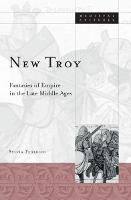
New Troy: Fantasies of Empire in the Late Middle Ages

New Troy: Fantasies of Empire in the Late Middle Ages

Sylvia Federico

2003

Genres: Poetry

Examines the political and literary uses of the Trojan legend in the medieval period England in the late fourteenth century witnessed a large-scale social revolt, a lingering and seemingly hopeless war with France, and fierce factional conflicts in royal politics and London civic government-struggles in which all parties sought to justify their actions by claiming historical precedent. How the Trojan legend figured in these claims-and in competing assertions of authorial legitimacy, nationhood, and rule in the later Middle Ages-is the complex nexus of history, myth, literature, and identity that Sylvia Federico explores in this ambitious book. During the late medieval period, many European political and social groups took great pains to associate themselves with the ancient city; the claim on Troy, Federico asserts, was crucial to nationhood and was always a political act. Her book examines the poetry and prose of several late medieval authors, focusing particularly on how Chaucer’s use of the Trojan legend helped to set the terms by which the Ricardian and Lancastrian periods were distinguished, and further helped to establish English literary history as a noble precedent in its own right. Federico’s book affords remarkable insight into the workings of the medieval historical imagination.
Want to ReadMark as ReadReviewsEdit

Write a comment/review

Sign UpLogin
User name
0 reviews
165 followers
PlaceholderPlaceholder
August 1, 2026
User name
0 reviews
165 followers
PlaceholderPlaceholder
August 1, 2026
User name
0 reviews
165 followers
PlaceholderPlaceholder
August 1, 2026
User name
0 reviews
165 followers
PlaceholderPlaceholder
August 1, 2026
User name
0 reviews
165 followers
PlaceholderPlaceholder
August 1, 2026
1.2.3.4.5.6
Exclusive savings
Subscribe to elevate magazine
BookfellersBeta
  • Clubs
Sign Up
Sign in
Add a book club
|Join a club
|
|
|
|eBooks
|Bookfellers rewards
Exclusive savings
Reader's Voices
Reader's Voices
Join a club
Join a club
Children
Children
Non-Fiction
Non-Fiction
Fiction
Fiction
eBooks
eBooks
Bookfellers rewards
Bookfellers rewards