Loading...
Book NameAuthor Names2024
Genres: List of Genres
PlaceholderPlaceholderPlaceholderPlaceholder
PlaceholderPlaceholderPlaceholder
Write a comment/review
Your rating
Post
User name
0 reviews
165 followers
PlaceholderPlaceholder
July 31, 2026
User name
0 reviews
165 followers
PlaceholderPlaceholder
July 31, 2026
User name
0 reviews
165 followers
PlaceholderPlaceholder
July 31, 2026
User name
0 reviews
165 followers
PlaceholderPlaceholder
July 31, 2026
User name
0 reviews
165 followers
PlaceholderPlaceholder
July 31, 2026
1.2.3.4.5.6
Exclusive savings
instagram
facebook
twitter
linkdin
linkdin
tiktok
threads

COMPANY

  • About Us
  • Contact Us
  • Partners
  • FAQ

EXPLORE

  • Book Clubs
  • How It Works
  • Genres

LEGAL

  • Privacy Policy
  • Terms and Conditions
  • Cookie Policy
  • Data and Privacy Preferences

CONNECT

  • Newsletter Signup
  • Affiliate Programme
  • Blog / Editorial
Powered by World Privilege Plus
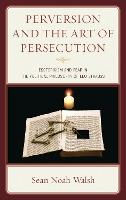
Perversion and the Art of Persecution: Esotericism and Fear in the Political Philosophy of Leo Strauss

Perversion and the Art of Persecution: Esotericism and Fear in the Political Philosophy of Leo Strauss

Sean Noah Walsh

2012

Genres: PoliticsPhilosophy

In this critical work on the political thought of Leo Strauss, Sean Noah Walsh addresses Leo Strauss’s claims about esotericism in the philosophic texts of Plato. He challenges Strauss’s understanding of esoteric writing as an attempt by Plato to secretly encode the highest truths “exclusively between the lines” in order to avoid persecution. Indeed, through the character of Socrates, the speaker with whom Plato is inextricably associated, Walsh asserts that Plato’s exoteric writings were sufficiently incendiary and provocative to demonstrate that a fear of persecution was not his highest priority. The politics that follow from Strauss’s thought depend on the interpretation of these Platonic philosophical bases and by analyzing how the problem of fear has been confronted in the works of Plato and Leo Strauss, Walsh offers a direct and thorough account of the politics that emerge from Strauss’s esoteric reading of political philosophy. Applying Lacanian psychoanalysis, Walsh investigates the discourse of Straussian esotericism. and examines Plato’s writing for examples of exoteric risk, subjecting both Plato and Strauss’s writings to Lacan's psychoanalytic technique for interpreting the function of desire in discourse. Given the continuing influence of Strauss’s ideas on contemporary politics, particularly within American foreign policy, Walsh’s examination of this Straussian esotericism for these effects will prove an interesting read for political theorists, international relations scholars, and philosophers alike.

Want to ReadMark as ReadReviewsEdit

Write a comment/review

Sign UpLogin
User name
0 reviews
165 followers
PlaceholderPlaceholder
July 31, 2026
User name
0 reviews
165 followers
PlaceholderPlaceholder
July 31, 2026
User name
0 reviews
165 followers
PlaceholderPlaceholder
July 31, 2026
User name
0 reviews
165 followers
PlaceholderPlaceholder
July 31, 2026
User name
0 reviews
165 followers
PlaceholderPlaceholder
July 31, 2026
1.2.3.4.5.6
Exclusive savings
Reader's Voices
Reader's Voices
Join a club
Join a club
Children
Children
Non-Fiction
Non-Fiction
Fiction
Fiction
eBooks
eBooks
Bookfellers rewards
Bookfellers rewards
BookfellersBeta
  • Clubs
Sign Up
Sign in
Add a book club
|Join a club
|
|
|
|eBooks
|Bookfellers rewards