Placeholder
Loading...
Book NameAuthor Name
Loading...
Book NameAuthor Name
Loading...
Book NameAuthor Name
Loading...
Book NameAuthor Name
Loading...
Book NameAuthor Name
Loading...
Book NameAuthor Name
Loading...
Book NameAuthor Name
Loading...
Book NameAuthor Name
Loading...
Book NameAuthor Name
Loading...
Book NameAuthor Name
1.2.3.4.5.6

Featured Books of the Month

Loading...
Book Name
Loading...
Book Name
Loading...
Book Name
instagram
facebook
twitter
linkdin
linkdin
tiktok
threads

COMPANY

  • About Us
  • Contact Us
  • Partners
  • FAQ

EXPLORE

  • Book Clubs
  • How It Works
  • Genres

LEGAL

  • Privacy Policy
  • Terms and Conditions
  • Cookie Policy
  • Data and Privacy Preferences

CONNECT

  • Newsletter Signup
  • Affiliate Programme
  • Blog / Editorial
Powered by World Privilege Plus
Loading...
Book NameAuthor Names2024
Genres: List of Genres
PlaceholderPlaceholderPlaceholderPlaceholder
PlaceholderPlaceholderPlaceholder
Write a comment/review
Your rating
Post
User name
0 reviews
165 followers
PlaceholderPlaceholder
July 31, 2026
User name
0 reviews
165 followers
PlaceholderPlaceholder
July 31, 2026
User name
0 reviews
165 followers
PlaceholderPlaceholder
July 31, 2026
User name
0 reviews
165 followers
PlaceholderPlaceholder
July 31, 2026
User name
0 reviews
165 followers
PlaceholderPlaceholder
July 31, 2026
1.2.3.4.5.6
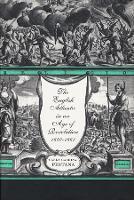
The English Atlantic in an Age of Revolution, 1640–1661

The English Atlantic in an Age of Revolution, 1640–1661

Carla Gardina Pestana

2007

Genres: History

Between 1640 and 1660, England, Scotland, and Ireland faced civil war, invasion, religious radicalism, parliamentary rule, and the restoration of the monarchy. Carla Gardina Pestana offers a sweeping history that systematically connects these cataclysmic events and the development of the infant plantations from Newfoundland to Surinam. By 1660, the English Atlantic emerged as religiously polarized, economically interconnected, socially exploitative, and ideologically anxious about its liberties. War increased both the proportion of unfree laborers and ethnic diversity in the settlements. Neglected by London, the colonies quickly developed trade networks, especially from seafaring New England, and entered the slave trade. Barbadian planters in particular moved decisively toward slavery as their premier labor system, leading the way toward its adoption elsewhere. When by the 1650s the governing authorities tried to impose their vision of an integrated empire, the colonists claimed the rights of "freeborn English men," making a bid for liberties that had enormous implications for the rise in both involuntary servitude and slavery. Changes at home politicized religion in the Atlantic world and introduced witchcraft prosecutions. Pestana presents a compelling case for rethinking our assumptions about empire and colonialism and offers an invaluable look at the creation of the English Atlantic world.
Want to ReadMark as ReadReviewsEdit

Write a comment/review

Sign UpLogin
User name
0 reviews
165 followers
PlaceholderPlaceholder
July 31, 2026
User name
0 reviews
165 followers
PlaceholderPlaceholder
July 31, 2026
User name
0 reviews
165 followers
PlaceholderPlaceholder
July 31, 2026
User name
0 reviews
165 followers
PlaceholderPlaceholder
July 31, 2026
User name
0 reviews
165 followers
PlaceholderPlaceholder
July 31, 2026
1.2.3.4.5.6
Exclusive savings
Exclusive savings
Reader's Voices
Reader's Voices
Join a club
Join a club
Children
Children
Non-Fiction
Non-Fiction
Fiction
Fiction
eBooks
eBooks
Bookfellers rewards
Bookfellers rewards
BookfellersBeta
  • Clubs
Sign Up
Sign in
Add a book club
|Join a club
|
|
|
|eBooks
|Bookfellers rewards